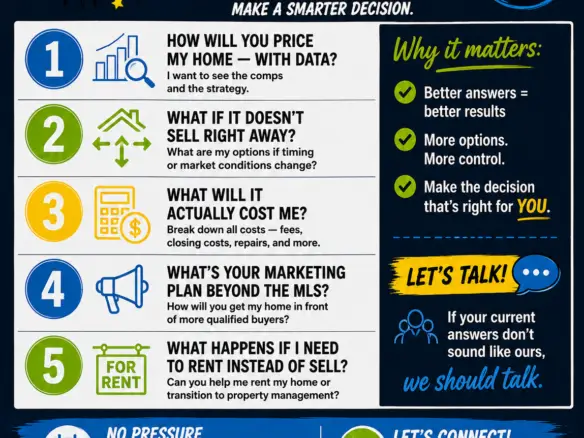
Watch: Three Questions West Valley Homeowners Are Asking
Mike explains what changed, what could happen to home prices, and whether buyers or sellers should adjust their plans.
By Mike Kemper, Arizona real estate agent/Realtor with Shebang Realty
Published: September 17, 2026
Market information and rates referenced as of September 16, 2026
On September 16, 2026, the Federal Reserve raised its target range for the federal funds rate by one-quarter of a percentage point, to 3.75% to 4.00%. It was the first increase since 2023.
If you are thinking about buying or selling a home in Surprise or elsewhere in the West Valley, the practical question is not what happened in Washington. It is what could change at the negotiating table here in Arizona.
My view is straightforward: I do not expect one rate increase by itself to cause a housing crash. I do expect it to reinforce a market that already rewards realistic pricing, strong presentation, and negotiation. More homes may sell below their original list price. Buyers may request more help with closing costs or mortgage-rate buydowns. Sellers may have to compete for a smaller pool of payment-qualified buyers.
That does not mean buyers automatically win every negotiation or that every seller should reduce the price. It means both sides need a better strategy.
The quick answer: A Fed rate increase can make borrowing more expensive over time, but the Fed does not directly set 30-year mortgage rates. In the West Valley, the most likely near-term effects are increased payment sensitivity, more selective buyers, continued price reductions on overpriced homes, and more negotiations involving concessions or rate buydowns.
In this guide
- What did the Federal Reserve change?
- Will mortgage rates rise by the same amount?
- What was happening in the Phoenix market before the increase?
- What could happen to West Valley home prices?
- Why could seller concessions increase?
- Is a rate buydown better than a price reduction?
- What should sellers do now?
- What should buyers do now?
- Frequently asked questions
What did the Federal Reserve change?
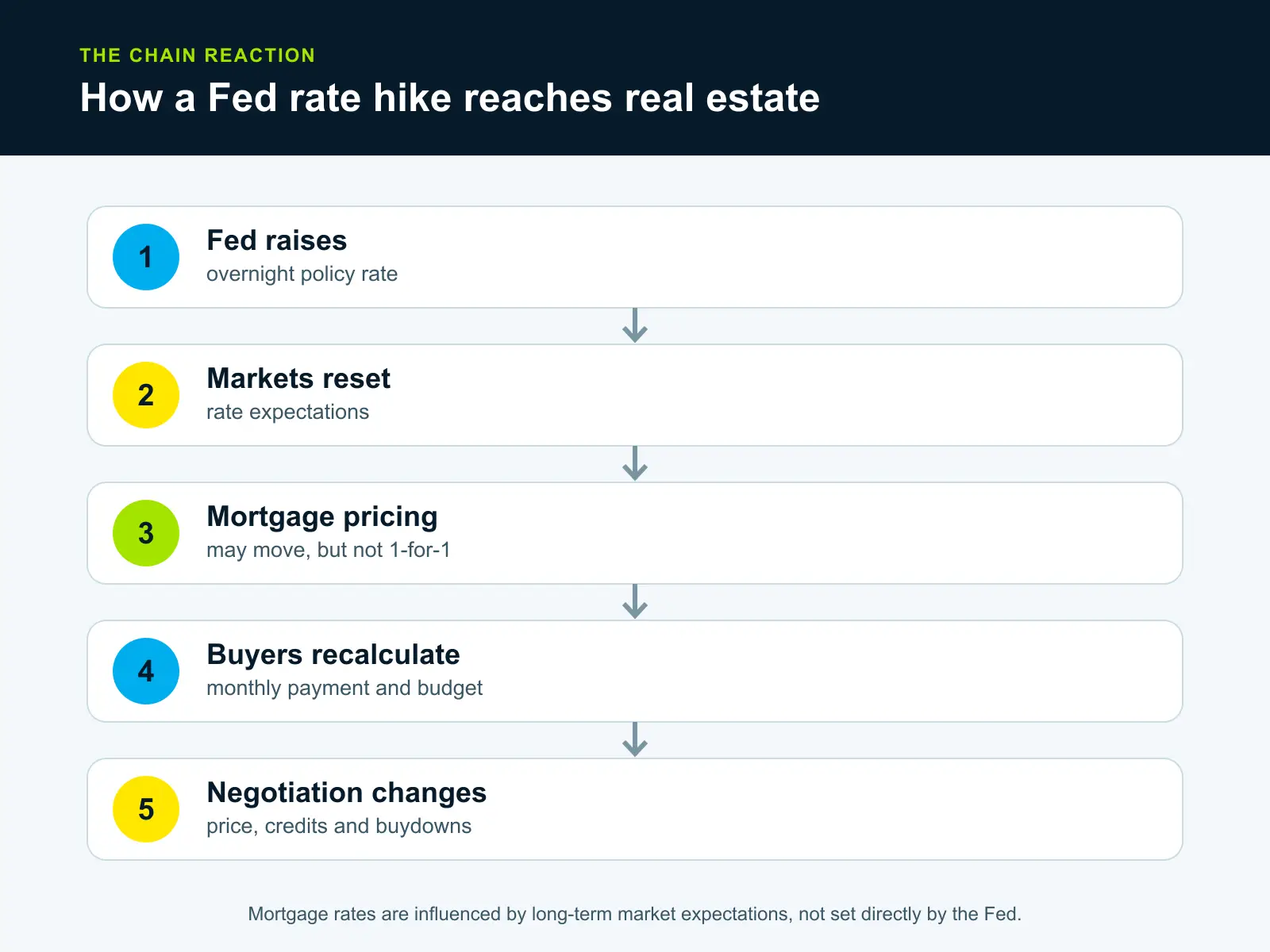
The Federal Reserve raised the federal funds target range by 0.25 percentage point. This is an overnight rate used within the banking system. It influences borrowing conditions throughout the economy, but it is not the rate a homebuyer receives on a 30-year fixed mortgage.
The Fed said inflation remained elevated and described the increase as supporting a return to its 2% inflation goal. Longer-term rates react not only to the current decision, but also to what financial markets expect inflation, economic growth, and future Fed policy to look like.
That distinction matters. A headline that says “the Fed raised rates” does not tell a buyer what mortgage rate will appear on a lender’s quote tomorrow morning.
Will mortgage rates rise by the same amount?
Not necessarily.
The average U.S. 30-year fixed mortgage rate was 6.76% on September 10, 2026, according to Freddie Mac. That was before the Fed announcement. Mortgage rates can move before a Fed meeting because lenders and bond investors price in their expectations in advance. They can also move differently after the announcement if the Fed’s message is more or less restrictive than markets expected.
The Federal Reserve itself explains that longer-term rates are affected by expectations about the future path of monetary policy and the broader economy, not simply the current federal funds rate.
For buyers, the correct response is to obtain a current, property-specific loan estimate from a qualified lender. For sellers, the correct response is to understand how a buyer’s monthly payment affects demand for the home.
What was happening in the Phoenix market before the increase?
This rate increase did not arrive in a vacuum. Buyers already had more negotiating room than they had during the frenzy of 2021.
ARMLS reported the following results for July 2026 single-family home sales across its market area:
- 75% sold below the original list price.
- 12% sold above the original list price.
- 14% sold at the original list price.
- Competition above list price was more concentrated in attainable price ranges, with about 40% of above-list sales under $400,000.
- Surprise was among the locations with a higher concentration of above-list closings.
Those figures are rounded, but the message is clear. Most closed homes were not selling above the seller’s original expectation, while accurately priced homes and certain affordable segments could still attract competition.
Separately, Realtor.com’s August 2026 report for the city of Phoenix showed active listings up 5.2% year over year, a median list price of $475,000, and price reductions on about 27.6% of listings. Phoenix is not the same as every West Valley community, but the data reinforces the broader pattern: buyers have choices, and they are sensitive to value.
What could happen to West Valley home prices?
My base-case expectation is modest and uneven softening rather than a sudden broad collapse.
The homes most exposed to downward pressure are likely to be:
- Listings that begin above what recent nearby sales support
- Homes that need repairs or feel dated compared with nearby alternatives
- Resale homes competing directly with new construction incentives
- Properties in neighborhoods with a larger supply of similar homes
- Listings with weak photography, incomplete presentation, or little marketing beyond the MLS
Homes that are well located, well presented, and priced correctly can still sell quickly or receive strong offers. Entry-level and payment-sensitive price ranges may behave differently from luxury homes. Surprise may behave differently from Goodyear, Buckeye, Sun City, or Peoria. Even within one community, condition and competition can produce different results.
One rate increase does not determine a home’s value. Supply, buyer demand, employment, inflation, new construction, seasonality, property condition, and the seller’s timing all matter.
Why could seller concessions increase?
When buyers are constrained by the monthly payment, they often value cash-flow relief more than a small reduction in the headline price.
A buyer may request that the seller contribute toward:
- Allowable closing costs
- A temporary mortgage-rate buydown
- A permanent mortgage-rate buydown
- Repairs or replacement of major components
- A home warranty
All concessions are negotiated and must comply with the loan program, contract, appraisal, and lender requirements. The maximum allowable contribution and the actual benefit depend on the buyer’s financing and circumstances.
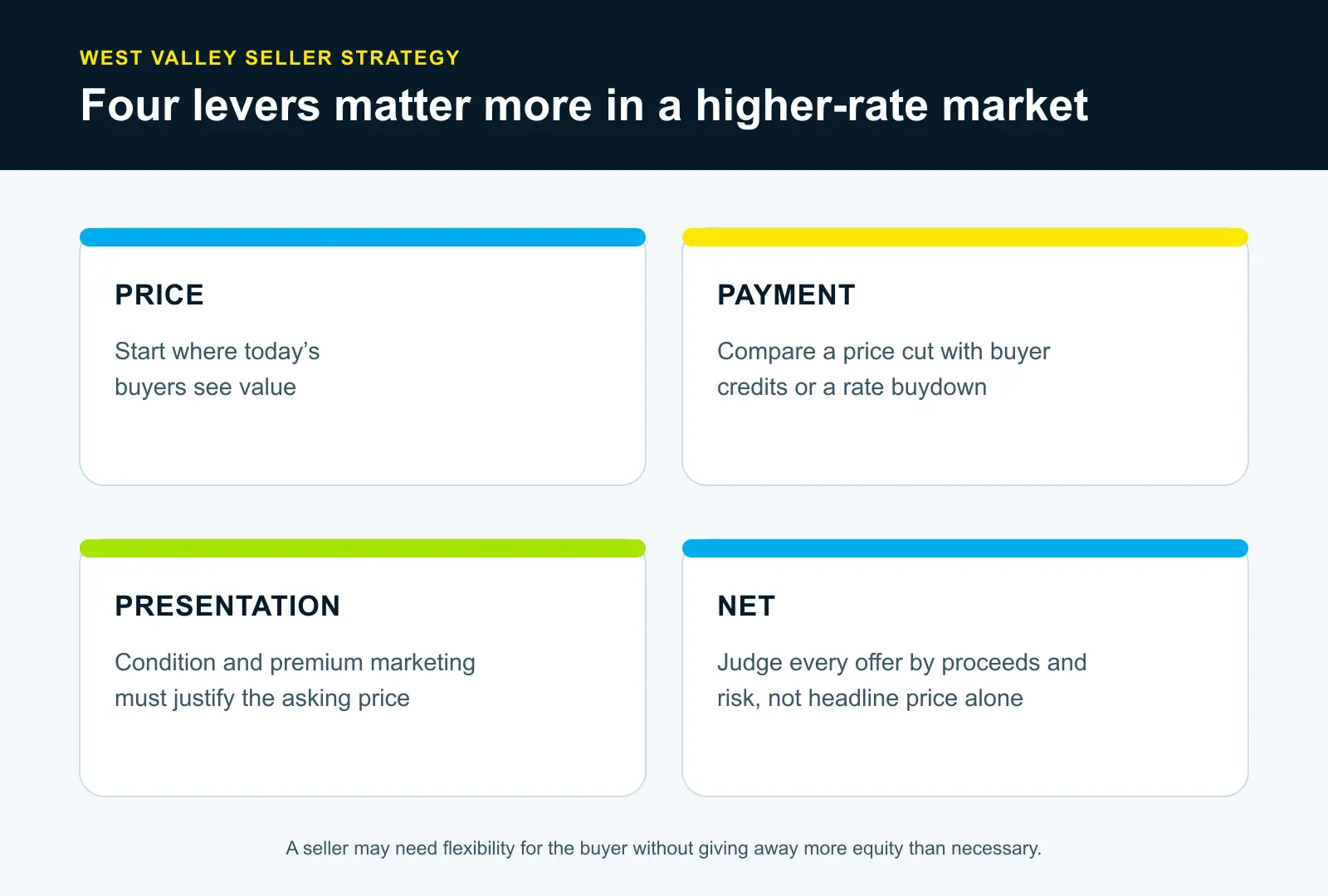
For sellers, the important number is not simply the accepted price. It is the estimated net proceeds after concessions, repairs, fees, timing risk, and the probability that the transaction will close.
Is a rate buydown better than a price reduction?
Sometimes, but not always.
A price reduction can improve search visibility, attract buyers who set a lower maximum price, and help when the home is plainly overpriced. A seller-funded rate buydown or closing-cost credit may create more monthly-payment relief for a particular financed buyer than the same number of dollars removed from the price.
The right comparison should be made with the buyer’s lender before the seller agrees to either strategy. Ask for side-by-side estimates showing:
- The buyer’s payment at the current contract price
- The payment after a proposed price reduction
- The payment after an allowable temporary or permanent buydown
- The seller’s estimated net under each option
- Any appraisal, qualification, or closing risks
The goal is not to advertise a fictional low payment. The goal is to find a structure that works for the actual buyer while protecting the seller’s result.
What should sellers do now?
1. Price for the market buyers are entering
Recent closed sales matter, but active competition, pending activity, price reductions, builder incentives, and showing feedback help reveal where the market is moving. Starting too high can cost valuable time and lead buyers to wonder what is wrong with the property.
2. Prepare a concession strategy before the first offer
Decide what matters most before emotions enter the conversation:
- Minimum acceptable estimated net
- Preferred closing timeline
- Maximum repair or concession exposure
- Whether a price reduction or buyer credit would be more useful
- Which terms create unacceptable risk
3. Market the home beyond basic MLS entry
In a selective market, a home must earn attention. Shebang Realty’s resale listings receive a Matterport 3D tour and drone video unless the property is in a drone no-fly zone. Our Homes.com-supported program also provides digital advertising and remarketing opportunities across participating platforms. Placements and results vary.
The principle is simple: your home is not simply listed. It is actively marketed.
4. Protect the seller’s net, not just the list price
When buyers ask for more assistance, every other selling cost becomes more important. Shebang Realty’s approved full-service residential listing offer is: Never pay more than $8,500 to sell your home, or 2%, whichever is less. Escrow/Title Fees are separate.
That does not eliminate the need to negotiate. It gives the seller another way to preserve equity while considering the price, concessions, repairs, and terms required to reach a successful closing.
5. React to evidence, not headlines
Track showings, repeat visits, online engagement, buyer feedback, competing listings, pending sales, and new price reductions. A national headline should not replace property-specific evidence.
What should buyers do now?
Higher rates are difficult for affordability, but a slower market can create options that were unavailable during a bidding frenzy.
Buyers should consider:
- Getting an updated preapproval before touring
- Comparing multiple lender quotes and total loan costs
- Evaluating the monthly payment rather than shopping by price alone
- Asking whether a seller credit, rate buydown, or price reduction is most useful
- Reviewing homes that have been on the market longer or recently reduced their price
- Keeping enough reserves rather than using every available dollar at closing
- Understanding that attractive, correctly priced homes can still receive competition
The cheapest-looking rate is not automatically the best loan. Buyers should compare the interest rate, annual percentage rate, points, fees, cash required, and how long they expect to own the home.
A practical 90-day outlook
No one can predict the market with certainty, but sellers and buyers can prepare for several reasonable paths.
Base case
Mortgage rates remain elevated, demand stays payment-sensitive, and the West Valley continues to experience selective buying, price reductions on optimistic listings, and frequent concession requests. Prices soften modestly in some segments but remain resilient in others.
More difficult case
Long-term rates rise further, buyers lose purchasing power, inventory accumulates, and sellers compete more aggressively through reductions and credits. Homes needing work or competing with builder incentives feel the most pressure.
More favorable case
Mortgage rates stabilize or retreat because markets become more confident that inflation will cool. Some postponed buyers return, improving contract activity. Homes that are already positioned and marketed correctly benefit first.
The season also matters. Fall and winter patterns can reduce activity independently of the Fed decision, so we should not attribute every market change to one announcement.
Frequently asked questions
Did mortgage rates automatically rise 0.25% when the Fed raised rates?
No. The Fed raised the overnight federal funds target range by 0.25 percentage point. Thirty-year mortgage rates are determined in longer-term financial markets and reflect inflation, bond yields, economic expectations, lender pricing, and anticipated Fed policy. They may rise, fall, or remain relatively stable after a Fed decision.
Will West Valley home prices fall?
Some homes and market segments may experience price pressure, particularly when inventory is high or the property begins overpriced. That does not mean every community or home will decline. Local supply, condition, price range, competition, and buyer demand must be evaluated property by property.
Should I wait to sell until rates come down?
Waiting may be reasonable for some owners, but future rates and prices are uncertain. The decision should consider your likely sale proceeds, current mortgage, equity, moving timeline, replacement housing, carrying costs, and alternatives such as renting or keeping the property.
Can a seller pay for a buyer’s rate buydown?
Potentially. Seller contributions and buydowns are subject to negotiation, the buyer’s loan program, lender approval, appraisal considerations, and applicable contribution limits. A qualified lender should prepare the actual figures.
Is a seller credit better than reducing the price?
It depends on the buyer and the property. A credit may create greater payment or cash-to-close relief for some financed buyers. A price reduction may improve search visibility or correct an overpriced listing. Compare the buyer’s payment and the seller’s estimated net under both options.
Can a home still sell at or above list price?
Yes. ARMLS reported that 12% of July 2026 single-family sales closed above their original list price and 14% closed at list price. Correct pricing, condition, location, price range, competition, and marketing can still produce a strong outcome. These market-wide percentages do not predict the result of an individual home.
How does Shebang Realty’s listing fee work?
Shebang Realty’s approved full-service residential listing offer is: “Never pay more than $8,500 to sell your home, or 2%, whichever is less.” Escrow/Title Fees are separate. The most useful comparison is a complete estimated seller net based on the property, likely price, proposed terms, and anticipated costs.
Get a property-specific strategy
The Fed’s decision is national. Your selling decision is personal and local.
If you are considering selling a home in Surprise or the Phoenix West Valley, Shebang Realty can help you compare pricing, likely competition, marketing, concession options, and estimated net proceeds without pressure.
About the author and brokerage
Mike Kemper is an Arizona real estate agent/Realtor and Shebang Realty’s primary homeowner educator. He focuses on helping Surprise and West Valley homeowners understand their options before making a selling decision.
Michelle Kemper is the Designated Broker of Shebang Realty and leads brokerage operations and offer negotiation.
Shebang Realty is a veteran-owned independent Arizona brokerage serving Surprise and the Phoenix West Valley. Office: 14886 W Valentine St, Surprise, AZ 85379. Phone: 623-476-1695.
Sources and disclosures
- Federal Reserve, FOMC statement issued September 16, 2026
- Associated Press, Fed raises its key rate for the first time since 2023
- Federal Reserve, How monetary policy affects longer-term interest rates
- Freddie Mac, Primary Mortgage Market Survey, September 10, 2026
- ARMLS, August 2026 STAT report using July 2026 sales data
- Realtor.com, Phoenix housing-market report using August 2026 data
- Consumer Financial Protection Bureau, Mortgage interest rate versus APR
This article is for general educational purposes. Market conditions, mortgage pricing, loan eligibility, allowable seller contributions, property values, and transaction terms vary. Mortgage examples and buydown options should be reviewed with a qualified lender. Real-estate strategy should be based on the individual property and transaction.